



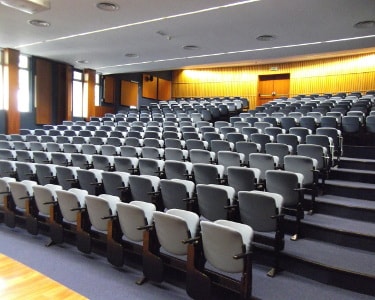
MAPi Seminar 2026/2027 - every week, Tuesdays @ 14h30, Oct-Dec, room FC6.028
15.12.2026 - Seminar 09 -- Work by João Barbosa, University of Porto
24.11.2026 - Seminar 08 - "Computer Vision and Machine Learning Challenges in Cancer Research", Prof. Hélder Oliveira, University of Porto
Abstract: In modern healthcare, especially in Cancer, medical imaging plays an important role throughout the clinical process, from diagnosis and treatment planning to surgery and follow-up research. Patient triage in acute and chronic care, imaging-guided interventions, and treatment planning optimization is now part of standard clinical practice in several subspecialties. Medical images normally face one or more of the following challenges during acquisition: low resolution (in the spatial and spectral domains); high-level of noise; low contrast appearance; presence of geometric deformations; and the presence of imaging artefacts. Finer spatial sampling, which can be achieved with longer acquisition times, can avoid the drawbacks of low resolution and low contrast. However, this also increases the probability of geometric transformations, such as patient movement, resulting in blurred images. Imaging artefacts also lead to challenging problems in medical image analysis. Learning methodologies could be also a way to help physicians in their daily tasks, for example when dealing with multiple data sources, data sparsity or providing information about visual findings using, for example, explainable methods. Our main activities are focused on interdisciplinary research, computational models on health data from multiple sources, models integrating clinical domain knowledge and transparent, causal and accurate algorithms for improving clinical outcomes.
17.11.2026 - Seminar 07 - "Evaluating Multi-Agent LLM Workflows: When They Help and How to Spot Their Mistakes", Alexandre Goudinho, University of Porto
Abstract: AI systems built on large language models (LLMs) combine multiple model calls into structured workflows. Published studies compare these workflows on standard benchmarks to see which approach performs best, yet they apply evaluation scripts designed for a single, direct model answer. In this talk, we examine how reliable these comparisons are by testing four representative workflows on an open 12-billion-parameter model across four tasks with different answer formats, covering short factual answers, text under strict formatting rules, logic puzzles, and numerical calculations over financial reports (3,600 outputs in total).
10.11.2026 - Seminar 06 (ONLINE) - "The Evolution of Multimodal Healthcare Fusion: From IoMT Sensor Networks to Multimodal Foundation Models", Gonçalo Ferreira, Universidade do Minho
Abstract: Multimodal artificial intelligence in healthcare relies on integrating heterogeneous patient evidence, ranging from physiological time series acquired via Internet of Medical Things (IoMT) devices to medical imaging, electronic health records (EHRs), and unstructured clinical text. This presentation delivers a critical methodological review of the historical and architectural evolution of multimodal healthcare fusion. Technological progress is categorized into four overlapping eras: (1) early heuristic fusion in Body Sensor Networks (BSNs) and IoMT telemetry, (2) deep representation learning and cloud-centric architectures, (3) joint representation alignment and missing-modality resilience, and (4) multimodal foundation models and edge-cloud deployments. For each era, representative integration loci (data-, feature-, and decision-level fusion), key computational and communication bottlenecks, and persistent reliability challenges are examined. Special emphasis is placed on practical trade-offs in real-world clinical and IoMT environments, including asynchronous data handling, latency, and hardware constraints. By synthesizing these architectural developments, the seminar outlines essential requirements for building robust and transportable multimodal AI systems in digital health.
03.11.2026 - Seminar 05 - "Asynchronous Team Automata", Prof. José Proença, University of Porto
Abstract: Team automata were introduced as a flexible extension of I/O automata to model collaborative behaviour in component-based and distributed systems. Their distinctive features include multi-party communication and a liberal synchronisation mechanism: components may jointly execute shared actions according to synchronisation policies that specify which subsets of components participate as senders or receivers. While this makes team automata well suited for modelling coordination, existing communication is synchronous and therefore insufficient for capturing certain behavioural aspects (e.g., due to message reordering) of modern networks and distributed systems, in which communication is typically asynchronous and message delays are unpredictable.
In this talk I will present asynchronous team automata (ATeams), which extend team automata with buffers to model asynchronous communication, in addition to conventional synchronous interaction. ATeams support individual interactions involving multiple senders and receivers, unlike well-known asynchronous models such as communicating finite-state machines and multi-party session types. The formal backbone includes the syntax and operational semantics of ATeams, study of well-formedness and well-behavedness conditions, and a prototypical A-Team tool that supports specification, animation and automated checks. This proposes ATeams as a unifying semantic foundation for modelling and analysis of heterogeneous synchronous–asynchronous multi-party interactions.
27.10.2026 - Seminar 04 - "Metaprogramming: foundations and applications", Prof. Pedro Ângelo, University of Porto
Abstract: Metaprogramming is the ability to write programs that generate, execute, manipulate and inspect other programs. In languages that support it, programs (usually referred to as code) are treated as first-class citizens. However, metaprogramming comes in many flavours, and each language supports a different combination of these capabilities. These differences lead to very different guarantees about code: some approaches ensure that generated code is well-typed, while others do not; some restrict code to two stages (execution both at compile time and run time), while others allow arbitrarily many.
In this talk, we will introduce metaprogramming and its core concepts, and tour a selection of languages that support it, using example programs to highlight their differences. We will then look at the logical foundations of typed metaprogramming, rooted in modal logic. Finally, we will extend the definition of metaprogramming to include the transmission of programs, and show how this can be achieved by combining metaprogramming with session types.
20.10.2026 - Seminar 03 - "The Formosa Crypto Approach to Formally Verified Cryptography", Prof. Manuel Barbosa, University of Porto
Abstract: In this talk I will present EasyCrypt and Jasmin, and how they are used to formally verify high-speed cryptographic implementations and relate their security to that of high-level provably secure specifications. As use cases I will use the NIST postquantum standards. Ongoing and future work on these Formosa Crypto tools will also be briefly discussed.
13.10.2026 - Seminar 02 - "From Research to Publication: Disseminating Scientific Knowledge", Prof. Rui Borges Lopes, University of Aveiro (slides)
Abstract: This talk will focus on the process of scientific publication as key in the dissemination of verifiable knowledge. It will cover how to structure research papers, choosing the right journals, and the submission and peer-review process. Practical tips for enhancing manuscript visibility, responding to reviewer feedback, and adhering to ethical guidelines will also be discussed. By highlighting the importance of publications, the aim is to help researchers to communicate their findings and maximize their impact in the scientific community.
06.10.2026 - Seminar 01 - "Why property-based testing matters", Prof. Pedro Vasconcelos, University of Porto;
Abstract: Property-based testing (PBT) is a testing methodology for software components (e.g. functions, classes, web APIs, etc.). Instead of writing specific test cases, a PBT test suite consists of general properties and (possibly) some data generators. An arbitrary number of tests can then be generated automatically by the testing framework. PBT originated more than 20 years ago in the functional programming community, but has since been adopted in many other programming languages and paradigms. It has also seen relevant industry adoption in companies like Ericsson, Volvo, Dropbox and AWS. This talk will present the main ideas behind PBT and show examples using Python's Hypothesis PBT library. Basic knowledge of Python is assumed, but no previous experience with PBT is needed. We argue that the current trend towards the adoption of AI-based tools (such as ChatGPT, Co-Pilot, etc.) for code generation makes PBT more relevant as a practical lightweight tool for code verification. This talk will be delivered in either English or Portuguese depending on the audience's preference.
Events
Check incoming events
FAQ
For incoming Students
Check FAQ's for incoming students for answers to commonly asked questions.
FAQ
For current Students
Mailing List
Subscription